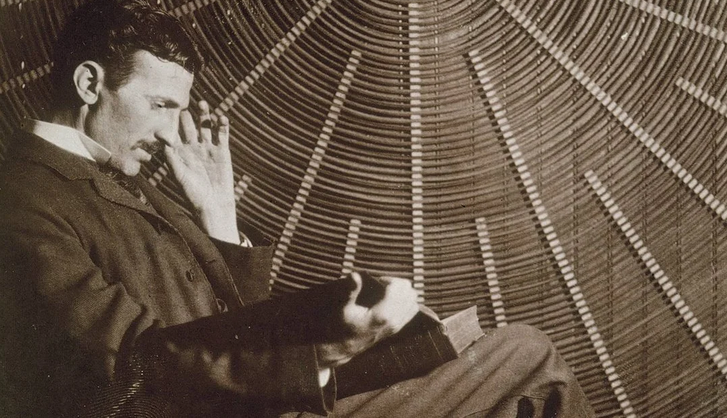
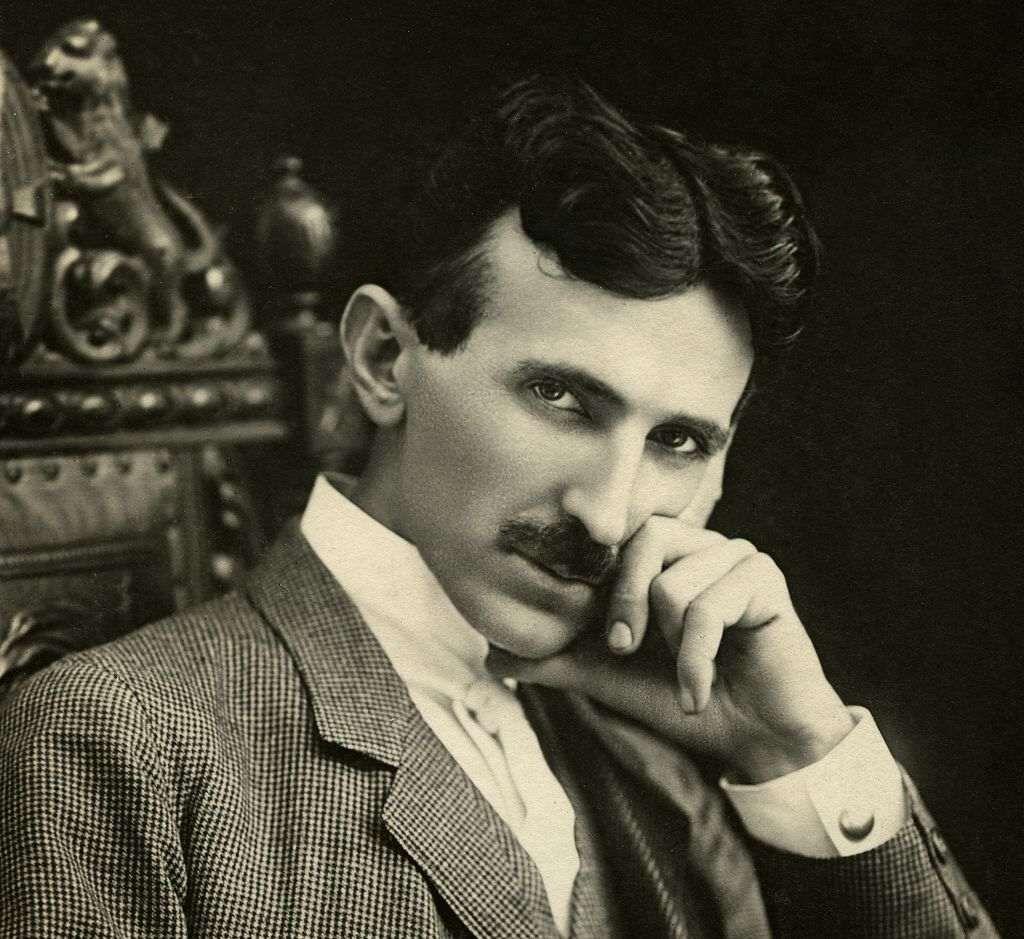
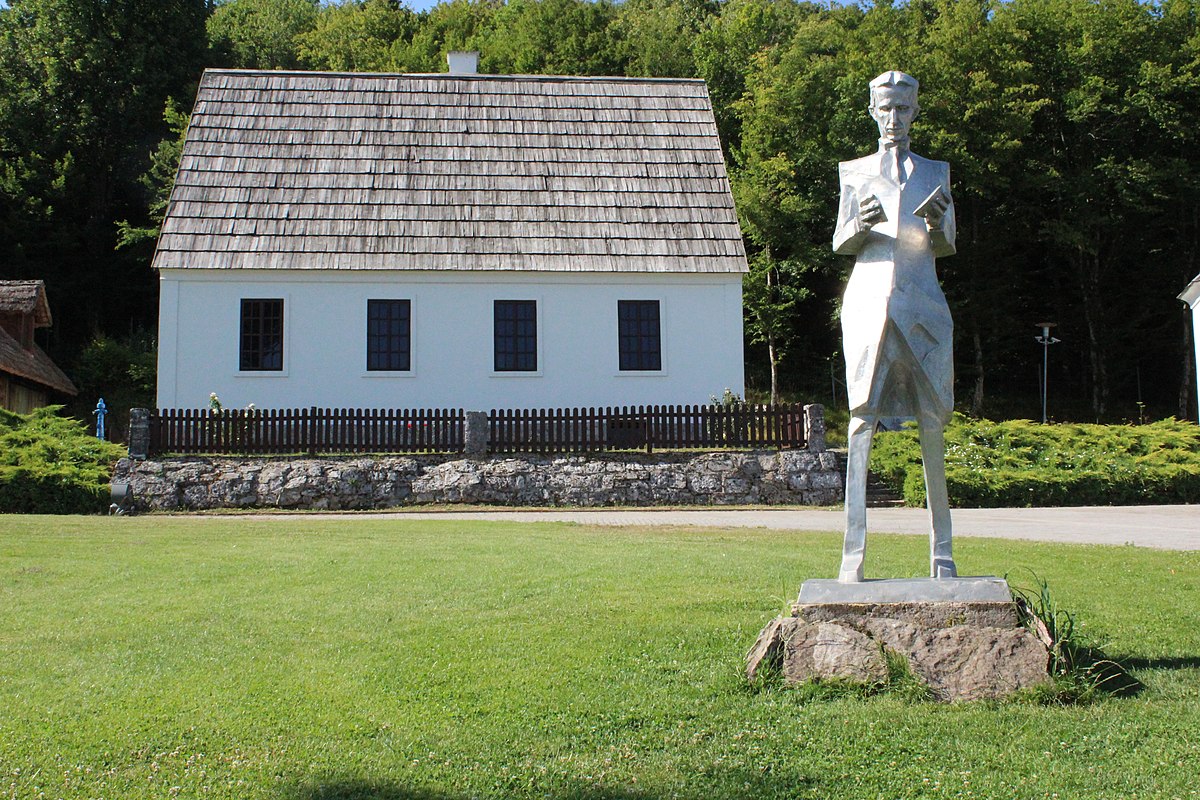
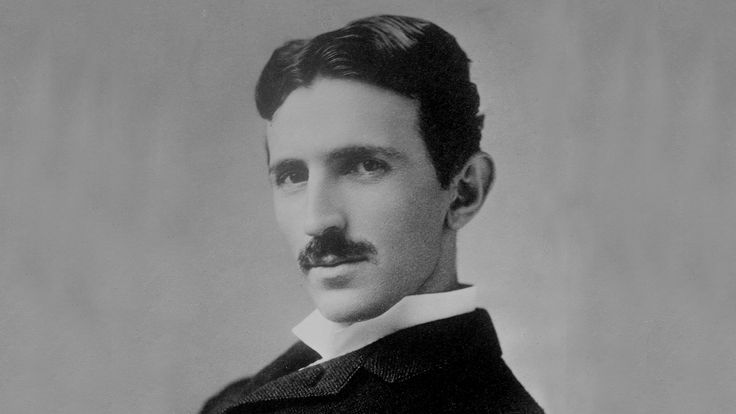
Nikola Tesla, born on July 10, 1856, in Smiljan, then part of the Austrian Empire (modern-day Croatia), was a pioneering inventor, electrical engineer, mechanical engineer, and futurist whose work laid the foundation for much of modern electrical technology. Renowned for his extraordinary intellect and imaginative vision, Tesla's innovations and ideas continue to influence the fields of electricity, magnetism, and wireless communication even more than a century after his death. Nikola Tesla is a perfect example of the idea that one person can change the world, no matter where they come from.
Tesla displayed remarkable ingenuity and intelligence from a young age. Even as a young boy his mind was quick and he showed a deep interest in science. He was fascinated by electricity and developed an extraordinary capacity for visualization, often envisioning intricate machines in his mind before ever constructing them. This mental precision allowed him to build complex devices without the need for detailed drawings, an ability that contributed to his reputation as a genius ahead of his time.
Tesla studied engineering at the Austrian Polytechnic in Graz and later at the University of Prague, though he never completed a formal degree. Despite this, his practical knowledge and innovative thinking would far surpass conventional academic training. While his more educated peers struggled to create any sort of innovation, Nikola Tesla had no such issue.
A mind like no other
Tesla is perhaps best known for his contributions to alternating current (AC) electricity. During the late 19th century, the "War of Currents" pitted Tesla and his supporters, including industrialist George Westinghouse, against Thomas Edison, who championed direct current (DC). Tesla's AC system proved far superior for long-distance power transmission due to its efficiency and ability to be easily transformed to different voltages. His work led to the widespread adoption of AC, forming the backbone of modern electrical grids and powering cities around the world.
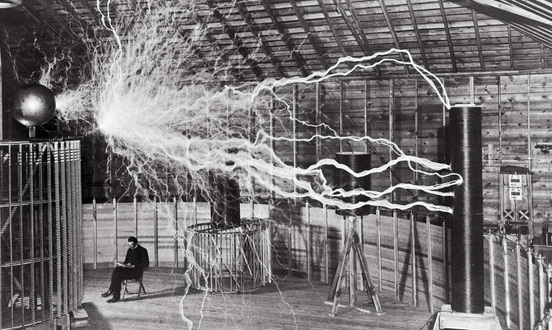
In addition to his AC electrical system, Tesla developed and experimented with numerous groundbreaking technologies. He made significant advances in electromagnetic induction, radio waves, and electrical oscillators. Tesla's inventions included the Tesla coil, a high-voltage, high-frequency transformer that became a critical component in early radio technology and is still used today in specialized applications. He also envisioned wireless energy transmission, predicting a future in which electricity could be transmitted without wires, an idea that remains influential in modern wireless technology research.
Tesla was a prolific inventor with over 300 patents to his name. Beyond electricity, he explored innovations in robotics, radar, remote control, and X-ray imaging. His fascination with wireless communication led him to construct the Wardenclyffe Tower on Long Island, New York, intending to demonstrate global wireless energy transmission and telecommunication. Although the project ultimately failed due to financial difficulties, it showcased Tesla's forward-thinking vision, as he imagined a world interconnected through wireless technology long before the advent of the internet or modern telecommunications.
A challenging life
Despite his brilliance, Tesla faced numerous challenges in life. He was often ahead of his time, and his ideas were sometimes considered too radical for investors and contemporaries. Unlike other inventors who capitalized on their work, Tesla struggled financially, living much of his later life in relative poverty. There are also rumors that many of his peers, especially direct competitors, stole his ideas and innovations and used them to enrich themselves. So from all sides Tesla’s career was marred by difficulties. He was either too advanced for people to understand or they took his ideas and spun them off for their own purpose. Also Tesla was known for his eccentric habits, including a strict daily routine, extreme focus on his work, and peculiar personal behaviors. Tesla never married, devoting his life entirely to his inventions and experiments. He was a person of singular focus and nothing could change his path.
Tesla's legacy extends far beyond his patents. His contributions laid the groundwork for countless modern technologies, from electrical power systems to radio and wireless communications. Tesla’s vision also inspired future generations of scientists and inventors, influencing fields as diverse as renewable energy, robotics, and even space exploration. Today, he is celebrated not only as a scientific genius but also as a symbol of creativity, imagination, and the pursuit of knowledge.
Cultural recognition of Tesla has grown significantly in recent decades. He has become a figure of fascination in popular culture, with numerous books, films, and documentaries exploring his life and work. Tesla's name graces everything from electric vehicles to scientific institutes, reflecting the enduring impact of his contributions to science and technology. Nikola Tesla passed away on January 7, 1943, in New York City, largely unrecognized in his time for the full scope of his achievements. Yet, his inventions and ideas have profoundly shaped the modern world, making him one of history’s most important and visionary scientists. Tesla’s story serves as a reminder that innovation often comes from those who dare to think differently, challenge convention, and imagine possibilities beyond the limits of their era.
In conclusion, Nikola Tesla was more than an inventor; he was a visionary whose imagination and intellect transcended the constraints of his time. His pioneering work in electricity, magnetism, and wireless technology laid the foundation for the modern technological era. Despite facing obstacles and obscurity during his life, Tesla’s legacy continues to inspire scientists, engineers, and dreamers worldwide, proving that true genius is timeless.
“My brain is only a receiver, in the Universe there is a core from which we obtain knowledge, strength and inspiration. I have not penetrated into the secrets of this core, but I know that it exists.”
Siéntete libre de llamarnos en horario laboral de lunes a viernes (8:00 - 16:00 EST). Nuestro equipo estará encantado de ayudarte a responder tus preguntas.













.jpg)


.png)


.jpg)


.jpg)


